
Time Loop Hunter
Play Time Loop Hunter
Time Loop Hunter Screenshots



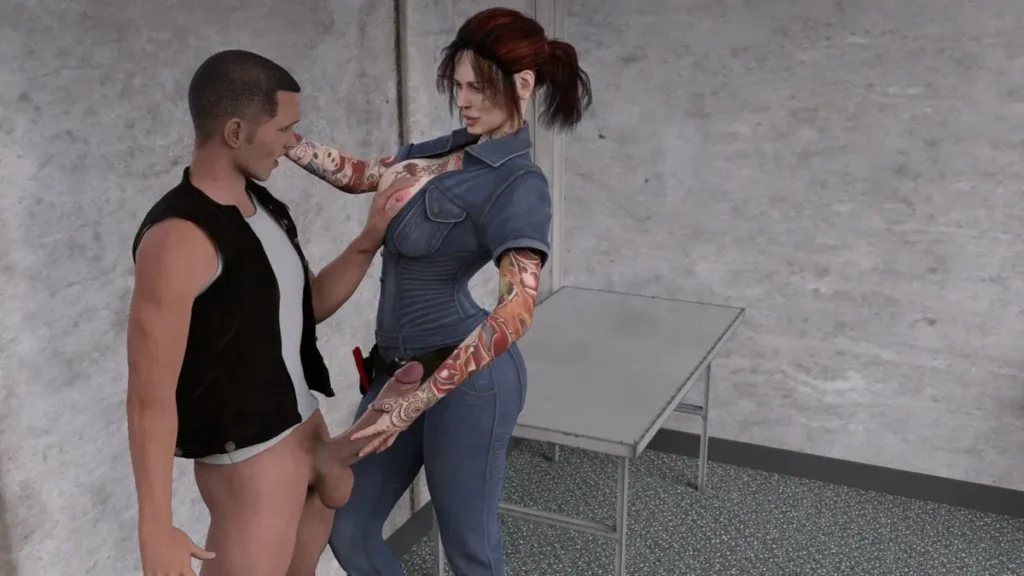



Time Loop Hunter review
Master every scenario, character path, and timeline in this complex narrative adventure
Time Loop Hunter stands out as a narrative-driven game that challenges players to navigate complex timelines and character relationships. This guide explores the game’s intricate mechanics, character pathways, and strategic decision-making that define the experience. Whether you’re tackling your first playthrough or optimizing specific routes, understanding the game’s core systems will enhance your engagement. The game’s branching narrative structure rewards careful planning and exploration, making it essential to grasp how different choices cascade through multiple timelines. Our comprehensive breakdown covers everything from basic mechanics to advanced strategies for unlocking all scenarios and character endings.
Understanding Time Loop Hunter’s Core Mechanics and Gameplay Systems
Ever feel like you’re stuck in a loop, banging your head against the same story wall in Time Loop Hunter? I sure did. On my first run, I thought I was clever, saving a key character early on. Fast forward three loops later, and my entire timeline had collapsed into a dystopian nightmare because of that single “heroic” choice. I was overwhelmed. The beauty—and the beast—of this game is that its Time Loop Hunter gameplay mechanics are a brilliantly intricate web. To master it, you don’t just play; you learn to think in multiple dimensions at once.
This chapter is your decoder ring. We’re breaking down the core systems that make this narrative adventure tick, from the mind-bending timeline navigation system to the delicate dance of its character relationship mechanics. By the end, you’ll see the matrix of choices not as chaos, but as a map you can learn to read.
How Timeline Navigation Works in Time Loop Hunter
At its heart, Time Loop Hunter isn’t about escaping the loop. It’s about commanding it. 🎮 The loop is your tool, not your prison. The core timeline navigation system functions on two parallel tracks: the Loop Thread and the Divergence Web.
Think of the Loop Thread as your personal, linear history. It’s the sequence of loops you’ve personally experienced and retained knowledge from. Every complete loop—whether it ends in your character’s death, a timeline reset, or a rare stable ending—adds to this thread. Your acquired items, key memories, and “Echoes” (more on those later) persist here. This is your character’s growing power.
The Divergence Web is the game’s hidden architecture. It’s the totality of all possible story branches radiating from every decision. You don’t see this map upfront; you reveal it by playing. Crucially, the game uses a brilliant “Echo” system. Major choices, deaths, or revelations leave an Echo in the Loop Thread. In subsequent loops, you can spend these Echoes at specific moments to “remember” a path not taken, essentially allowing you to diverge from your previous actions in that moment without having to replay everything leading up to it.
Here’s a practical example from my play: In Loop 1, I failed to stop a villain’s early scheme. In Loop 2, armed with the Echo of that failure, I reached the critical junction. The game gave me an option I didn’t have before: “I have a bad feeling about this warehouse…”—an Echo-prompted choice that let me branch onto a new path immediately. This is the key to efficient navigation. You aren’t meant to manually replay identical hours to test one different dialogue option. The timeline navigation system rewards strategic failure and learning.
Pro Tip: Don’t fight the loop. Embrace early, “bad” endings. Each one grants Echoes that act as keys to unlock shortcuts and new branches in future cycles, accelerating your scenario progression guide.
Your main interface is the Chronicle Menu, accessible between loops. This isn’t just a save file; it’s a detective’s board. Here, you can review the Loop Thread, see which Echoes you hold, and pin specific goals for your next cycle, like “Secure the Alliance with the Scholar” or “Discover what’s in the Locked Vault.” Setting an active goal subtly shifts available dialogue and highlights relevant objects in the world. It’s the game’s way of helping you steer the colossal ship of its branching narrative paths.
Character Interaction Systems and Relationship Building
Forget simple friendship meters. 🧩 In Time Loop Hunter, relationships are living, temporal entities. The character relationship mechanics are built on a foundation of Contextual Trust and Memory Seeds.
Every major character has multiple “facets” of trust—Professional, Personal, Secretive, etc. Your actions and dialogue build these facets independently. Helping Captain Aris solve a case boosts Professional trust. Sharing a personal fear in a quiet moment boosts Personal trust. Crucially, characters react not just to what you know, but when you know it. Using knowledge from a future loop (an Echo) can dramatically boost a facet if used wisely, or shatter trust entirely if it reveals you as an unnatural “knower.”
This is where Memory Seeds come in. By sharing a specific, poignant moment with a character—like choosing to show mercy to their ally or recalling a detail about their past they haven’t told you in this loop—you plant a Seed. In a future loop, you can “water” that Seed by referencing that shared memory, creating an instant bond that bypasses hours of groundwork. It’s the most powerful tool for unlocking deep character paths.
The system is dynamic. Characters talk to each other. If you build high Professional trust with the Engineer but consistently snub the Merchant, the Engineer might comment on your poor business sense, or the Merchant might warn others you’re untrustworthy. Your reputation is a ripple effect.
To manage this complexity, here’s a breakdown of some core pathways and what they demand. Think of this as your relationship cheat sheet.
| Character Pathway | Core Trust Facets Required | Key Decision / Memory Seed Trigger |
|---|---|---|
| The Scholar’s True Alliance | Intellectual (High), Secretive (Medium) | In Loop 3+, correctly reference her lost research from a previous loop. Then, choose to hide the evidence, not publish it. |
| The Veteran’s Redemption | Personal (High), Honorable (Medium) | Be present at the docks at midnight on Day 2 in a loop where you have previously failed to stop the assassination. Share your “failure” with him. |
| The Spy’s Dual Loyalty | Secretive (High), Professional (High) | Discover their safehouse before Day 4, but do NOT confront them. Instead, leave a specific token (found in the Mayor’s desk) there. |
| The Engineer’s Revolution | Professional (Very High), Personal (Low) | Supply them with blueprints from the Archive in one loop, then in the next, support their unsafe test despite others’ protests. |
Navigating these character relationship mechanics is like a dance across time. You learn their steps in one loop to lead perfectly in another.
Decision Points and Their Cascading Effects Across Playthroughs
This is where the magic—and the madness—happens. 🔮 The Time Loop Hunter decision system is less about “Choice A or B” and more about throwing stones into a temporal pond and watching the ripples collide across multiple playthroughs. Decisions are tagged with invisible “Weight” and “Reach.”
A Heavy decision (e.g., “Who lives or dies in the confrontation?”) creates a massive local ripple, drastically altering the immediate next loop’s opening state. A Far-Reaching decision (e.g., “Do you advocate for stricter city laws?”) might have a minor immediate effect but will fundamentally shift available options 3 or 4 loops later, altering political landscapes or resource availability.
The genius is in the cascade. A small, seemingly innocuous choice in Loop 1 can lock or unlock a critical path in Loop 5. For instance, on my first blind run, I always bought my gear from the friendly market vendor. It was cheap and easy. It wasn’t until my seventh loop, trying to access a locked faction, that I discovered my consistent patronage had marked me as a “traditionalist” in hidden flags, permanently barring me from the radical technologists’ path. I had to go back to a much earlier save and change my economic behavior from the very first cycle.
The game’s decision system tracks everything in a hidden ledger called the Causal Ledger. You can glimpse parts of it through character dialogue and environmental changes. Is the city more militarized? That’s a cascade from several pro-security choices. Is a certain NPC now missing from their usual spot? A choice two loops ago led them to flee.
This is the strategic core of planning your route to unlock all endings. You’re not just making choices for this story; you’re pruning and shaping the entire narrative tree for future harvests. Some endings require a timeline so pure and consistent in one ideological direction that you must avoid certain “helpful” choices in early loops because they subtly contaminate the narrative alignment.
Personal Insight: The “Golden Ending” isn’t about making all the “right” moral choices. It’s about making a specific sequence of morally contradictory choices across different timelines that, in sum, leave every key faction in a state of fragile, prepared neutrality. You have to play the villain in one loop to be the ultimate hero in the final one.
To keep from getting lost, here is a step-by-step beginner strategy for managing this beautiful complexity:
- The Scout Loop: 😎 On your very first playthrough, disable guide mode. Play intuitively, make choices that feel right, and absorb the story. Let it end however it ends. This creates your baseline and grants your first, precious Echoes.
- The Echo Hunter Loop: 🎯 Use your Chronicle Menu. Pin a goal related to one specific character or mystery. Your sole aim this loop is to gather one or two key Memory Seeds or major Echoes, even if the overall ending is worse.
- The Path Builder Loop: 🔨 Act on the Echoes and Seeds you’ve collected. Use them to forge a deep bond with one character or firmly establish one major story branch. This loop should feel radically different from your Scout Loop.
- Chronicle & Analyze: 📖 After each loop, spend time in the Chronicle Menu. Cross-reference changes. Did new options appear? Did a character’s opening dialogue shift? This analysis is as important as playing.
- Targeted Cleanup: 🧹 Once you grasp the web, start loops with the express purpose of “cleaning” a timeline variable—like reversing a single early decision to see its downstream effects without the noise of your other changes.
Mastering the Time Loop Hunter gameplay mechanics is a journey from confusion to clarity, from being a victim of time to becoming its architect. By understanding the symbiotic relationship between the timeline navigation system, the deep character relationship mechanics, and the cascading Time Loop Hunter decision system, you transform from a passive player into an active Hunter. The game’s branching narrative paths become a puzzle you are equipped to solve, and that daunting goal of how to unlock all endings becomes a structured, thrilling pursuit. Now, armed with this knowledge, step back into the loop. This time, you’re in control.
Time Loop Hunter delivers a sophisticated narrative experience that rewards careful attention to detail and strategic planning. By understanding the core mechanics of timeline navigation and character relationships, players can unlock the full depth of the game’s branching storylines. The interconnected nature of Dana, Alice, and Janice’s paths creates multiple avenues for exploration, ensuring that each playthrough can feel distinctly different based on your choices. Mastering the decision system and learning how to efficiently navigate between scenarios allows you to experience all available content and endings. Whether you’re pursuing a specific character route or aiming for complete 100% completion, the strategies outlined in this guide provide the foundation for success. Take your time exploring different paths, experiment with various dialogue choices, and don’t hesitate to revisit earlier scenarios with new knowledge to uncover hidden content.